
MetaclinicMetaclinic Start a conversation

For independent practices

The data advantage was never theirs to keep

The story an independent doctor has been told for fifteen years is that scale wins, because scale owns the data. Join the system or lose the referral, because the system can see the patient's record and you cannot. That was true. It is becoming one of the more expensive assumptions in American medicine.

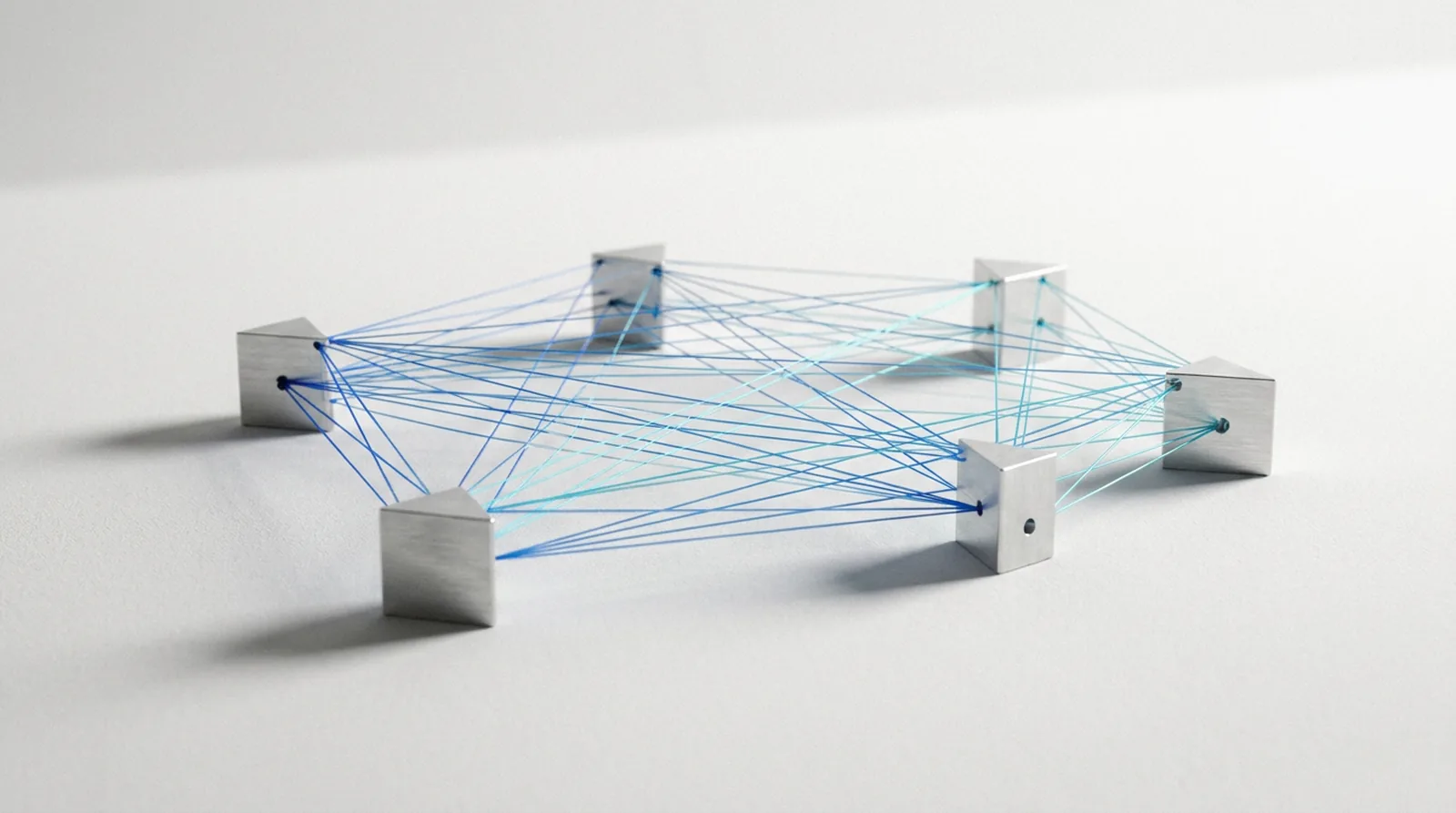
Several separate machined units on a white ground joined directly to each other by fine lit filaments, with no central hub.
A network with no centre is not a weaker network. It is a different shape.

Why the largest systems are bad at this

the constraint is structural

A large health system's interoperability is excellent inside its own walls and indifferent at the boundary, because that is what it was bought to do. The record is optimized for one enterprise's workflow, its data model is the vendor's, and the incentive to make the outside easy has historically pointed the other way: friction at the edge is retention.

So the thing a system is genuinely good at — moving a chart between two of its own clinics — stops being an advantage the moment the patient's care crosses an organization. And most care does. The patient sees an independent gastroenterologist, gets their pathology from an outside laboratory, fills prescriptions somewhere else, and is followed by a primary care physician in a different group entirely. Nobody in that chain is inside the same walls.

The rules changed, and they changed against the incumbent

Information blocking made withholding electronic health information a federal matter with civil monetary penalties rather than a competitive tactic. A large system's historical advantage was partly that it could be slow at the boundary without consequence. That is now the position with the legal exposure, and it is the smaller, faster-moving party that benefits from the change.

A network you assemble rather than join

org, suborg, grant

The alternative to being acquired is not isolation. It is a network with a different shape: the practices you actually refer to, the laboratories you actually use, the specialists you actually trust, connected to each other directly rather than through a corporate parent that had to buy all of them first.

That is what the tenancy model is for. Each organization keeps its own tenant, its own patients, and its own record. What moves between them is a grant: this practice, this patient, this class of data, for this long, for this reason. No merger, no shared login, no pooling of everyone's patients into one list, and no requirement that everyone run the same software.

  • A referral becomes a scoped grant with an expiry rather than a permanent role somebody forgets to remove.
  • A laboratory sends results into the referring practice's own worklist rather than into a fax queue.
  • A specialist sees the case they were consulted on, and that case only.
  • The primary care physician who is quietly responsible for the whole picture can actually see the whole picture.
  • Every one of those is recorded, so the network can prove what it shared and when.
Two machined plates facing each other with identically registered milled recesses, held in agreement by a single channel of light between them.
Agreement between two records is a thing you engineer, not a thing you hope for.

Data that arrives before the decision

point of care, meaning in time

Interoperability that delivers the record after the visit is a filing system. The only version that changes an outcome is the one where the result is in front of the person deciding, at the moment they decide, in a form they can act on.

So results move as events rather than as overnight batches: when a laboratory signs a case out, that is a discrete thing that happened, and it propagates to the parties whose release rules already permit it rather than waiting to be requested. Screens that exist to show work in motion — worklists, queues, the boards a practice actually watches — receive updates pushed from the server rather than waiting for someone to reload.

What that does and does not mean

It means the gap between a result existing and the right person seeing it is measured in the time the interface takes rather than in business days. It does not mean every surface streams: pushed updates are on the screens where they earn their keep, and a connection is only as fast as the slowest party in it. A laboratory that sends a nightly file is a laboratory that sends a nightly file, and the honest version of this page says so.

One small object lit from within at the centre of a white ground, with many fine filaments converging on it from beyond the frame.
One record everyone refers to, rather than several that have to be reconciled.

One record everyone refers to

the source of truth, and why it matters

The expensive failure in multi-organization care is not that data is missing. It is that there are four versions of it and no way to tell which is current. The practice has one number, the laboratory has a corrected one, the specialist is working from a printout, and the patient has a portal showing a fifth thing.

A network that shares one record rather than four copies does not have that problem, and the reason it can is that the record carries its own history: the version, the correction, the time it changed, and who has seen which. A corrected result is not a new document that may or may not reach everyone. It is a change to the thing they are all already looking at, and the release model is what decides who that includes.

The coordination is already a billable service

the documentation was the barrier

Several of the things a well-run independent network does anyway are, on their own, reimbursable services. Coordinating care between organizations, following a chronic condition between visits, tracking whether a plan actually happened, reviewing data submitted from outside the practice — these are recognized activities with their own programs, not favors.

Most practices do not bill them. The reason is rarely eligibility; it is that the documentation each program requires costs more staff time than the payment returns, so the work gets done and never captured. That arithmetic only changes if the documentation is a byproduct of doing the work rather than a second job performed afterwards from memory.

Which is what tracked care management is: a plan is a set of expectations with due windows, closed by the diagnostic events that satisfy them, and the record of what was tracked, when it closed, and who did it is produced by the tracking rather than reconstructed for a claim.

What this page is not telling you

It is not telling you that your practice qualifies for a particular program, which codes apply, what they pay, or that a payer will accept them. Eligibility depends on your patient population, your payer mix, your state, and the specifics of each program, and all of it changes. Take the question to your biller and your payers with real numbers. What is claimed here is narrower and checkable: the documentation these programs require is a byproduct of the work rather than a separate exercise.

Where this goes

software with a role in the outcome

The useful way to read all of it: for most of the last two decades, clinical software's job was to be the system of record and to bill correctly. That is a clerk's role, and it is why so much of it is resented by the people who have to use it.

A system that moves the right data to the right person before a decision is made is doing something else. It is participating in the care rather than documenting it afterwards, and the measure of whether it works is not uptime or adoption but whether the person deciding had what they needed. That is a higher bar than clinical software usually sets for itself. It is also the only one that justifies the amount of attention it takes from a clinician's day.

Start with the referrals you already have

the first conversation

A network evaluation is concrete: which practices and laboratories you already exchange with, what breaks in that exchange today, and which of those relationships would be worth making formal. Nobody has to switch systems for the first one to work.

Book a 30-minute callThe tenancy model

Which stakeholder is currently asking you for data you cannot easily give them?

That is the useful first conversation, and it is a short one. Bring the laboratories, the practices, and the thing that breaks today.

service@meta.clinic Read the release model first